Marketing Agency Statement of Work Template
Statement of work template for paid media and lifecycle marketing: scope, baseline and target path, and staged delivery with acceptance tests. For agencies.
Make it yours, in seconds
Every template is a starting point. Drag to shift colour, typography and layout — the live preview updates as you move.
Move the dots to shift colour, typography and layout. The preview updates live.
Get more from every document
This template helps you turn a paid media and lifecycle engagement into a signed scope with clear targets and acceptance tests. Charts, task dates, fees, and a single dashboard sit ready to edit.
Get the agreement signed on the page
Your client reads the scope, checks the pricing, and signs in the same document. No PDF to print, sign, scan, or lose.
Assemble agreements from sections you trust
Pull in pricing, steps, and terms blocks, then save your tuned scope section and reuse it on every new client.



Clients sign from any screen
Your pricing tables, charts, and timelines hold their shape when a client opens the agreement on a phone between meetings.


See which terms your client lingers on
Heatmaps show if they stalled at pricing, and session replays let you follow up before a doubt turns into a delay.
Know the moment they open or sign
Get a ping when your client views the agreement, comments on a clause, or signs, so your follow-up lands on time.
Draft scope and pricing together, live
You tweak the deliverables while your producer adjusts the pricing breakdown, both in one document, before it goes out.
See how every part fits
The document opens with a branded cover and a scope summary, then moves through method, terms, and fees before closing on testimonials and signatures. Keep, drop, or reorder anything to match your engagement.

Branded SOW Cover with Project Reference and Date
Opens the statement of work for Ashlar Running with the SOW-ASH-01 reference, Manchester location and issue date. Sets a professional first impression and makes the document easy to file and trace.
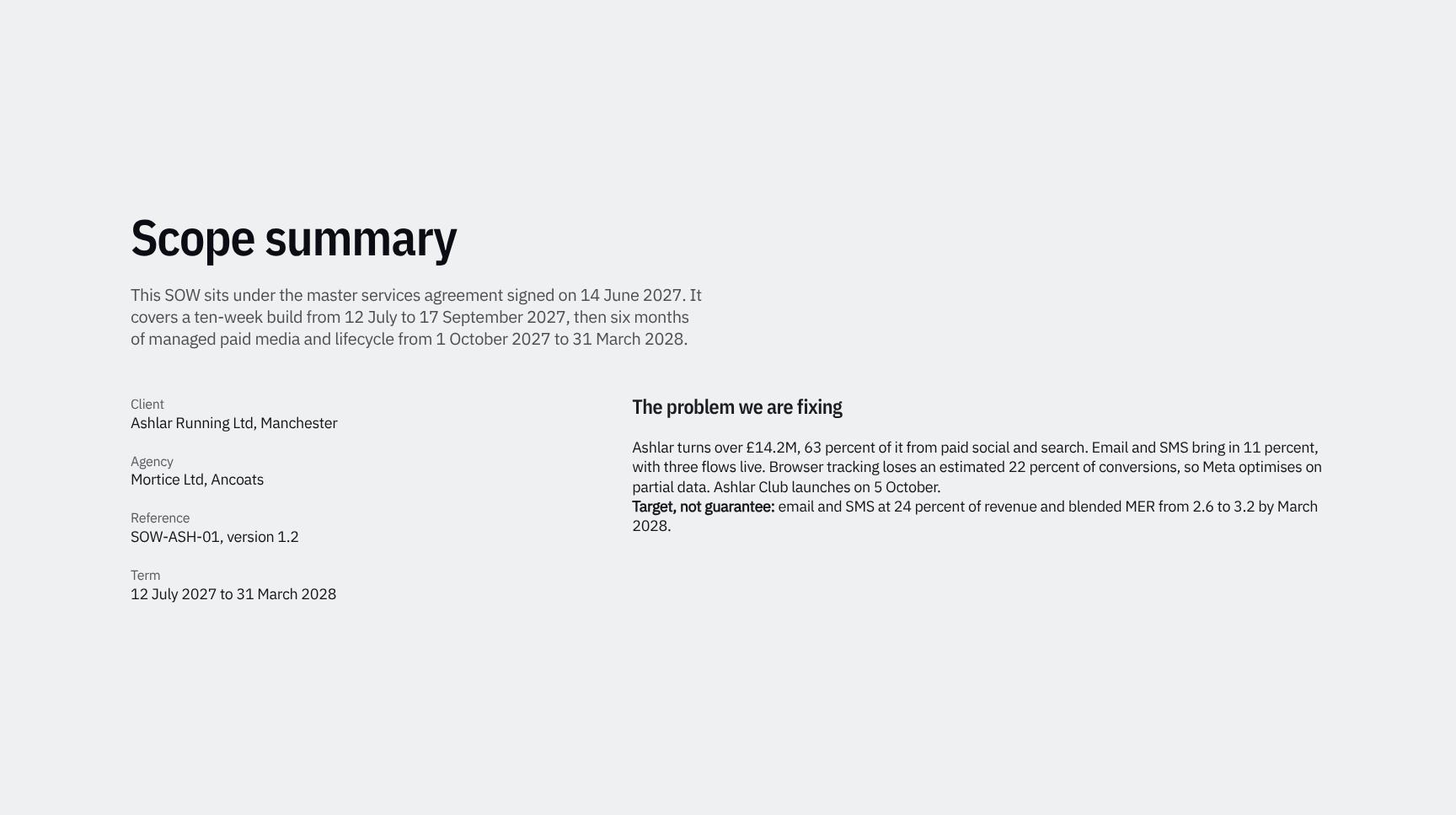
Scope Summary: Ten-Week Build and Six-Month Managed Run
Summarises how the SOW sits under the master services agreement, with build dates of 12 July to 17 September 2027 and a six-month paid media and lifecycle run. Aligns both parties on scope from the first page.

Guiding Principle: Measure, Spend, Automate
A short statement of the working philosophy: fix measurement first, then spend, then automate what works. It frames every decision in the SOW and shows clients how the agency prioritises.
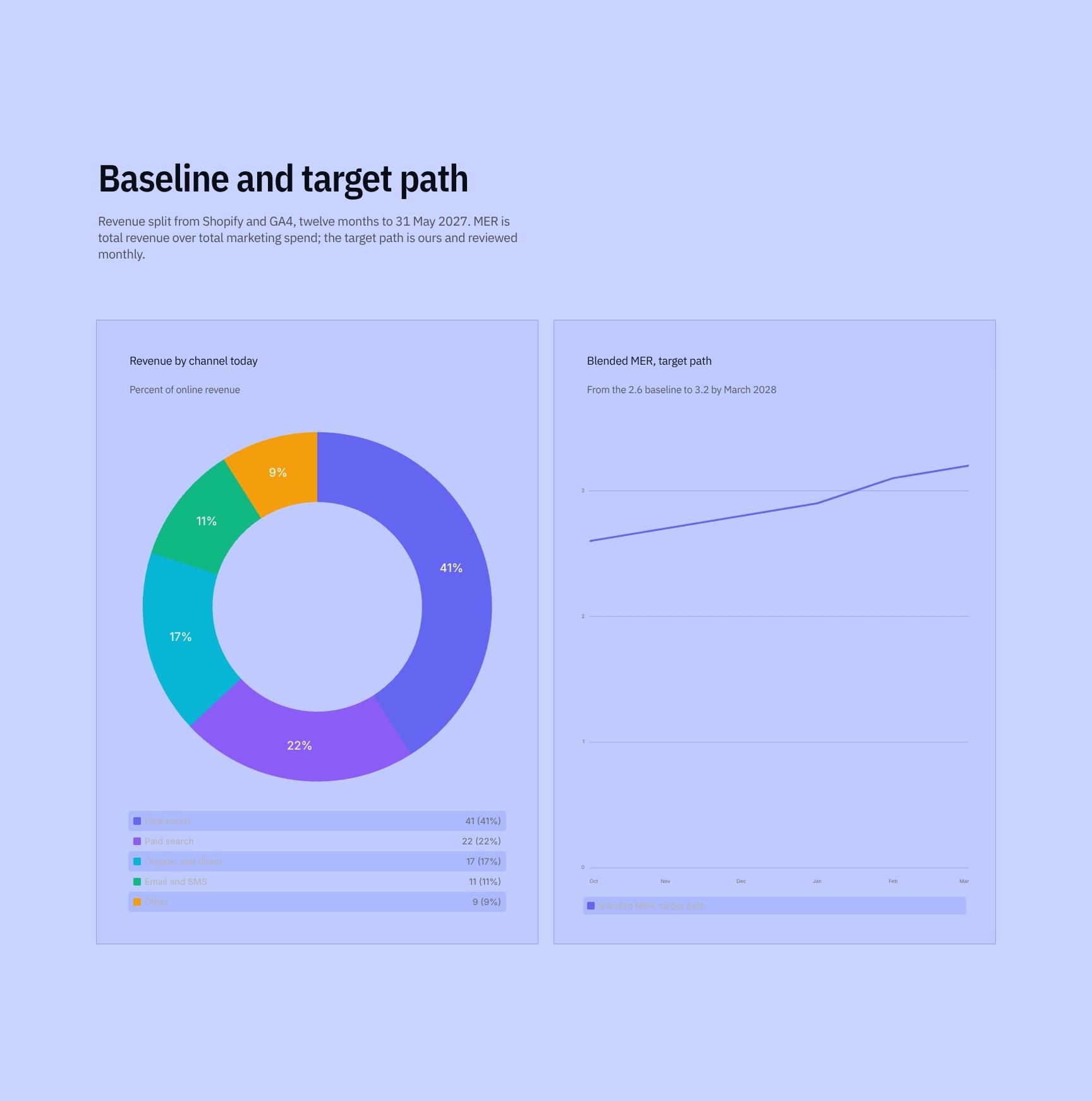
Revenue Baseline and MER Target Path Charts
Charts revenue from Shopify and GA4 for the twelve months to 31 May 2027 and defines MER. Sets a target path reviewed monthly, giving both sides a clear, measurable starting point for success.
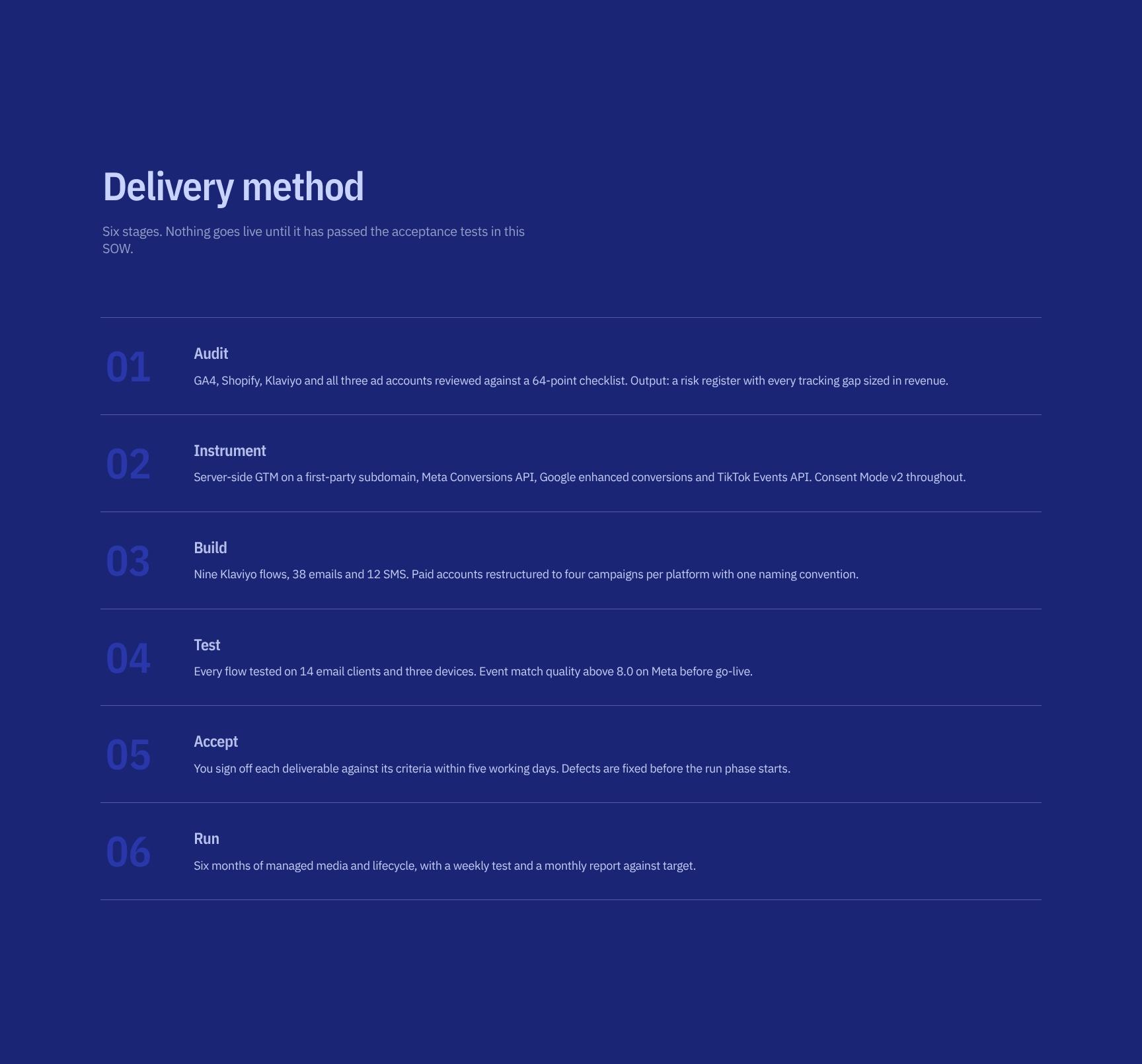
Six-Stage Delivery Method with Acceptance Gates
Walks through six delivery stages, from auditing GA4, Shopify and Klaviyo onward. Nothing goes live until it passes the acceptance tests, reducing risk and setting clear expectations.
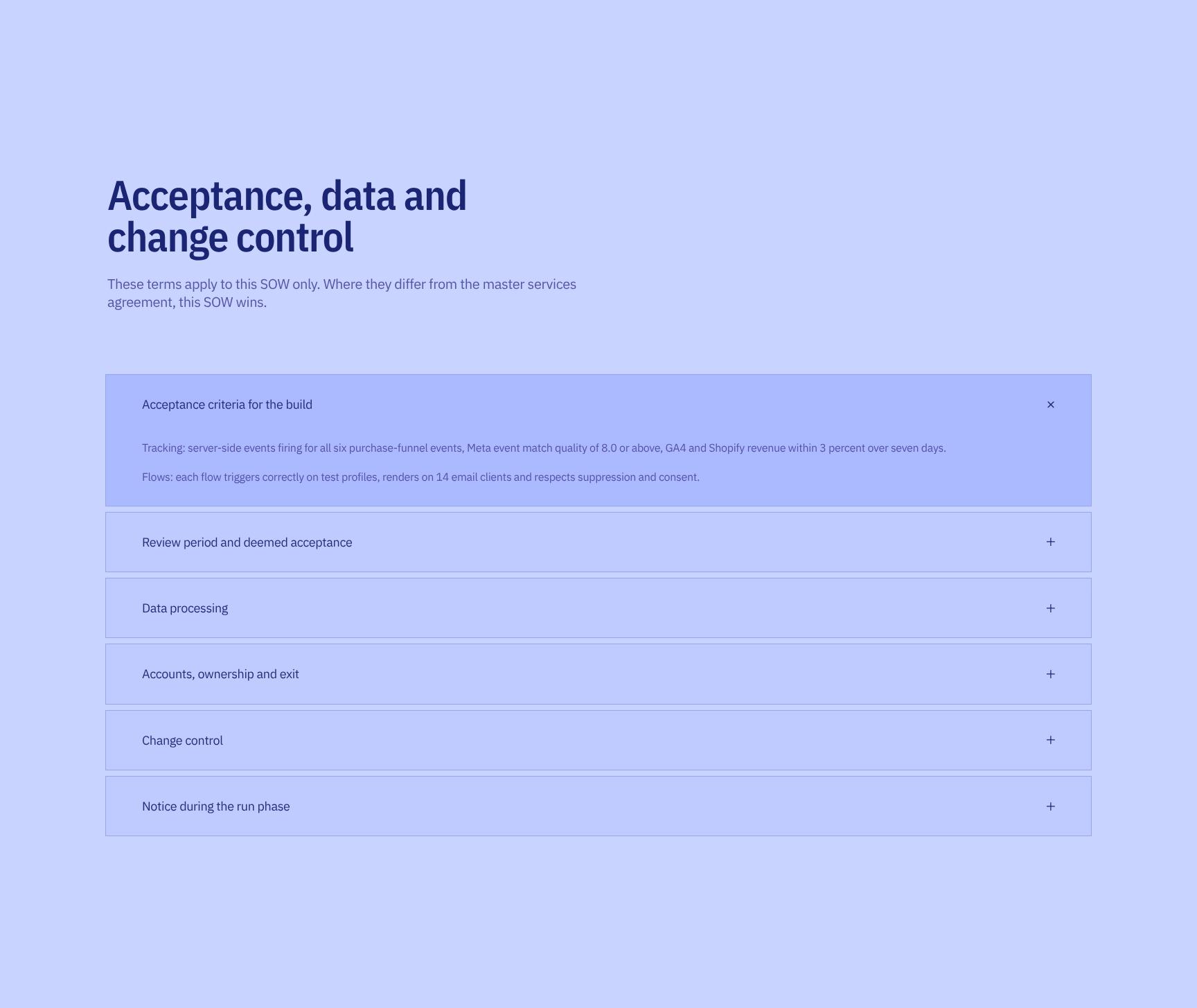
Acceptance, Data Ownership and Change Control Terms
Expandable terms covering acceptance, data handling and change control, with this SOW overriding the master services agreement where they differ. Keeps contract detail easy to scan and removes ambiguity.
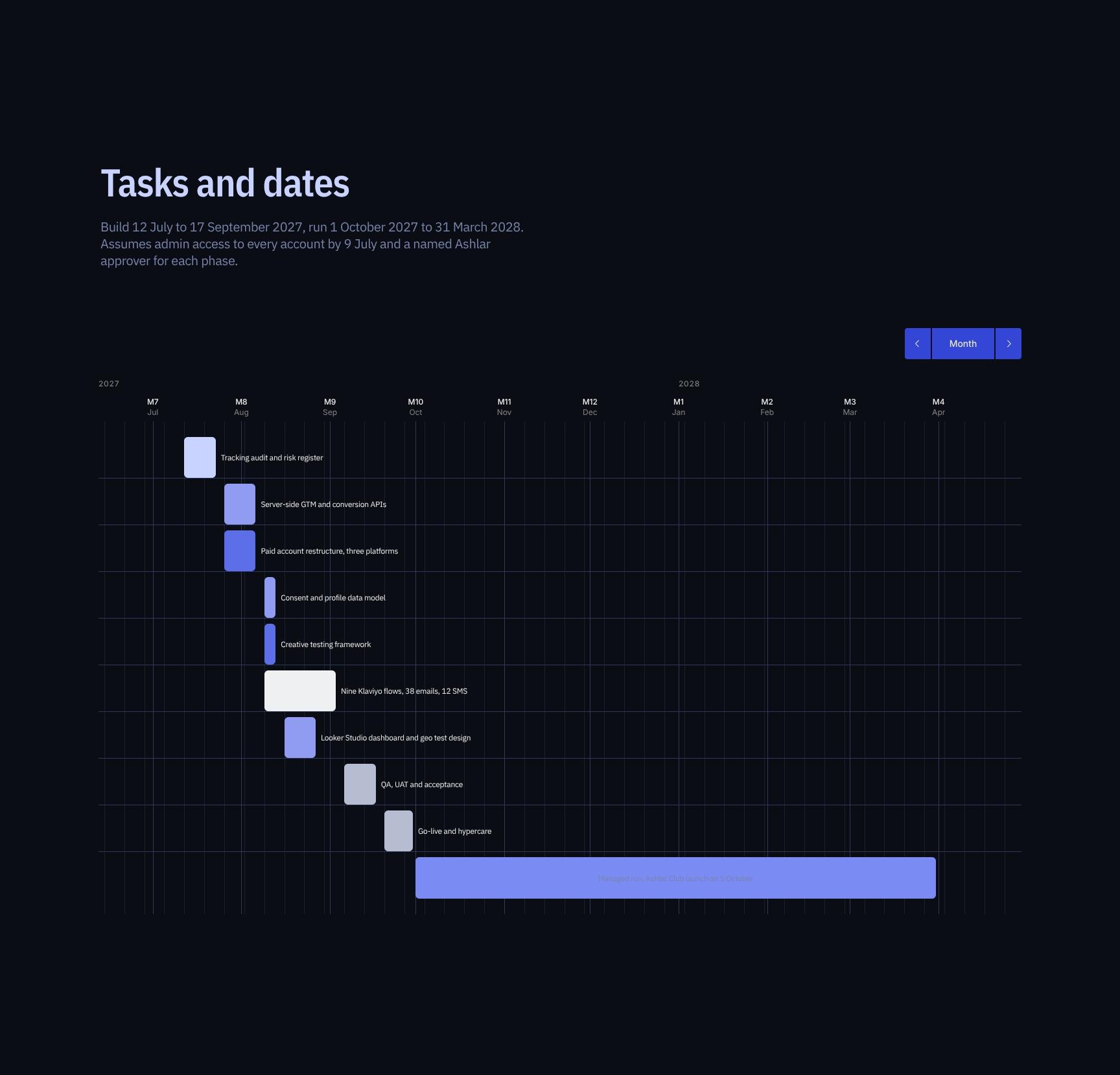
Project Task List with Build and Run Dates
Lays out tasks and dates for the build (12 July to 17 September 2027) and run (1 October 2027 to 31 March 2028). States assumptions such as admin access by 9 July and named approvers per phase.
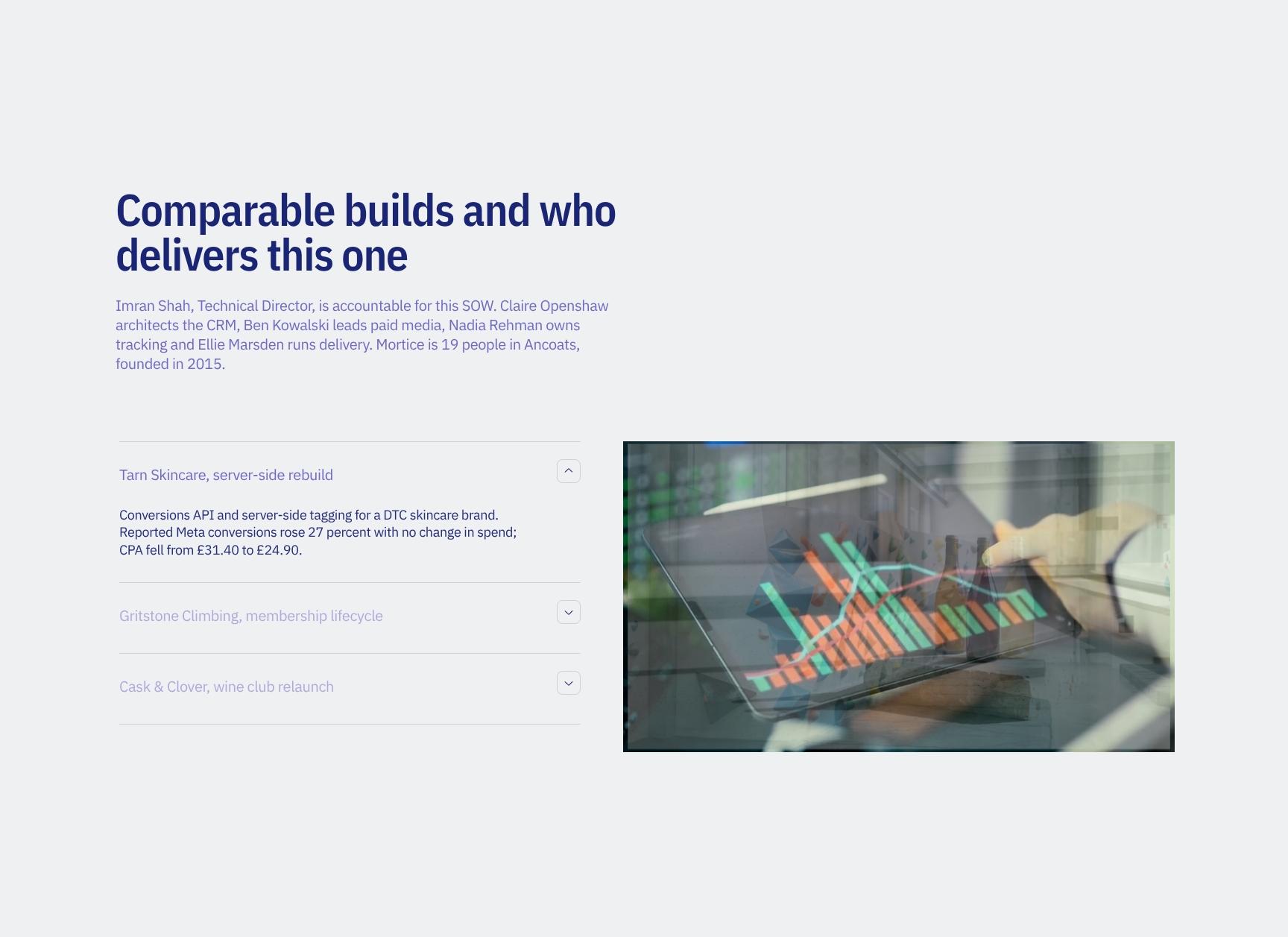
Comparable Builds and Named Delivery Team
Names Imran Shah as accountable Technical Director, alongside the CRM, paid media, tracking and delivery leads. Pairs the team with comparable past builds to build confidence in who does the work.
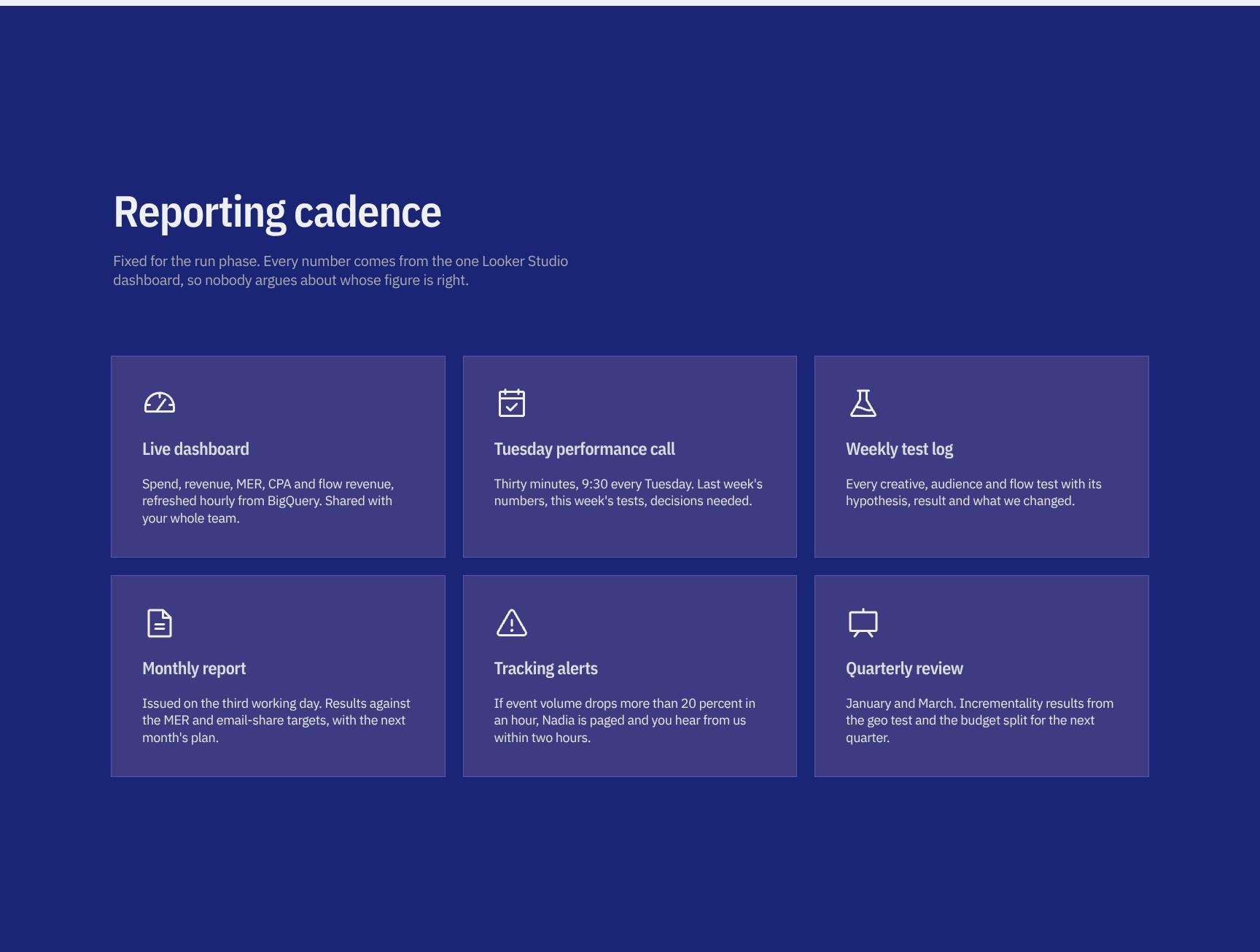
Reporting Cadence with Single Looker Studio Dashboard
Fixes the reporting rhythm for the run phase, with every figure drawn from one Looker Studio dashboard. One source of truth ends disputes over whose numbers are right.
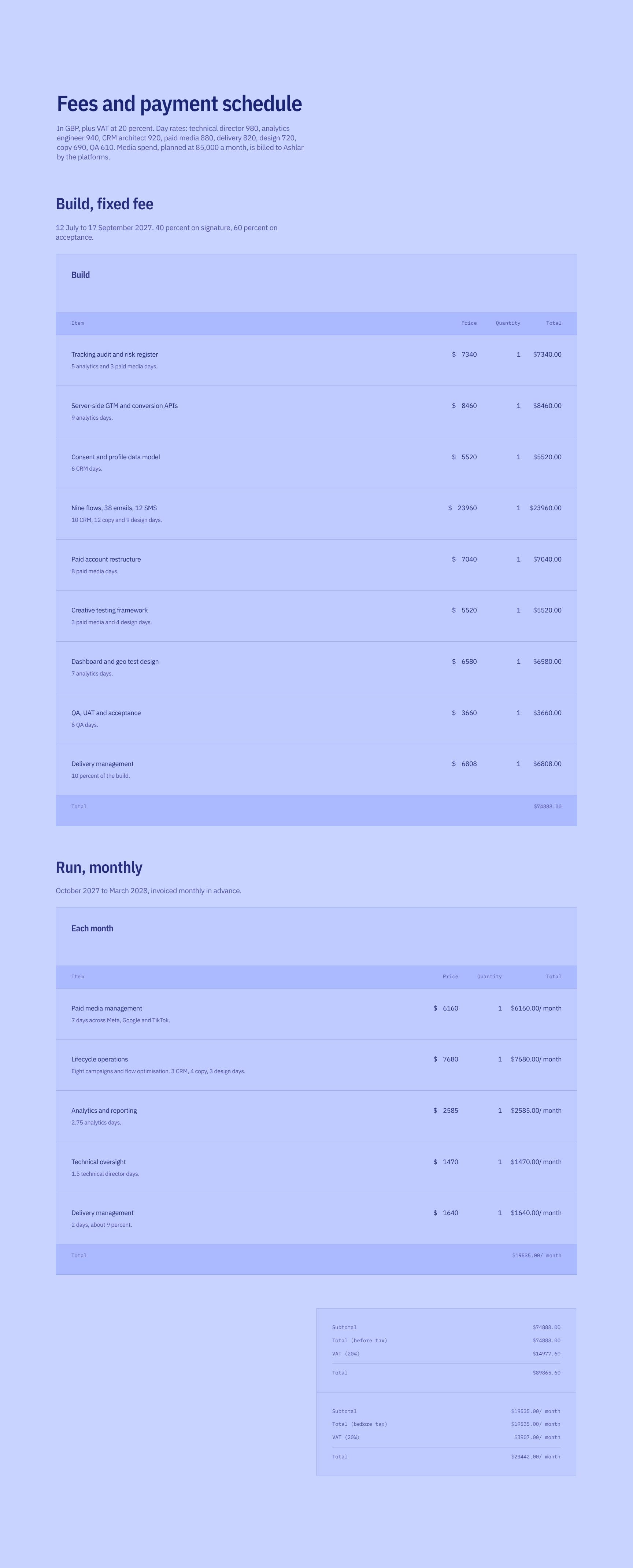
Transparent Fees, Day Rates and Payment Schedule
Details fees in GBP plus 20 percent VAT, with day rates by role from technical director to QA. Covers planned media spend and payment timing so there are no budget surprises.
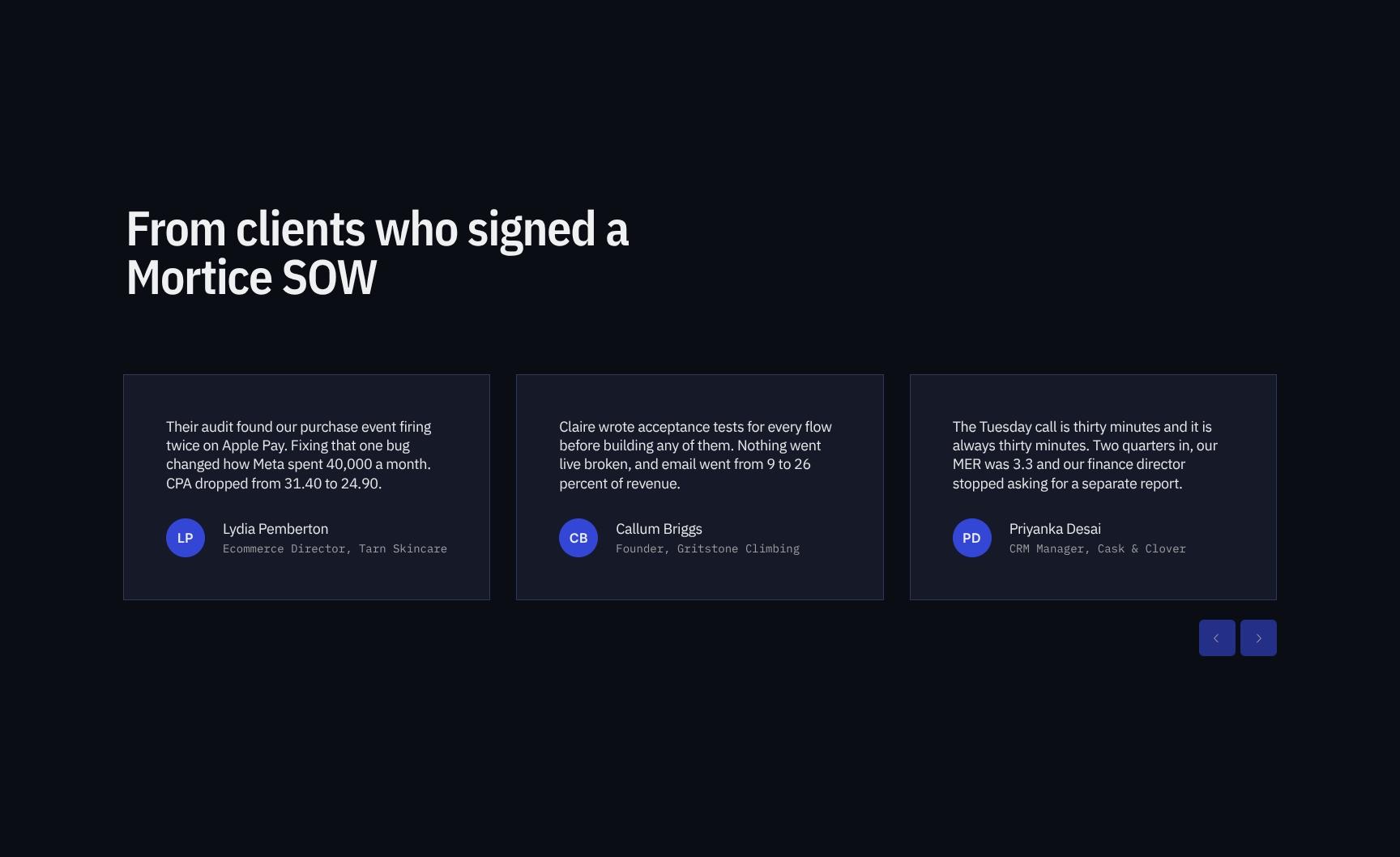
Client Testimonials from Signed Mortice SOWs
Quotes from clients who signed Mortice SOWs, including a tracking fix that cut CPA from 31.40 to 24.90. Concrete results offer social proof at the moment of decision.
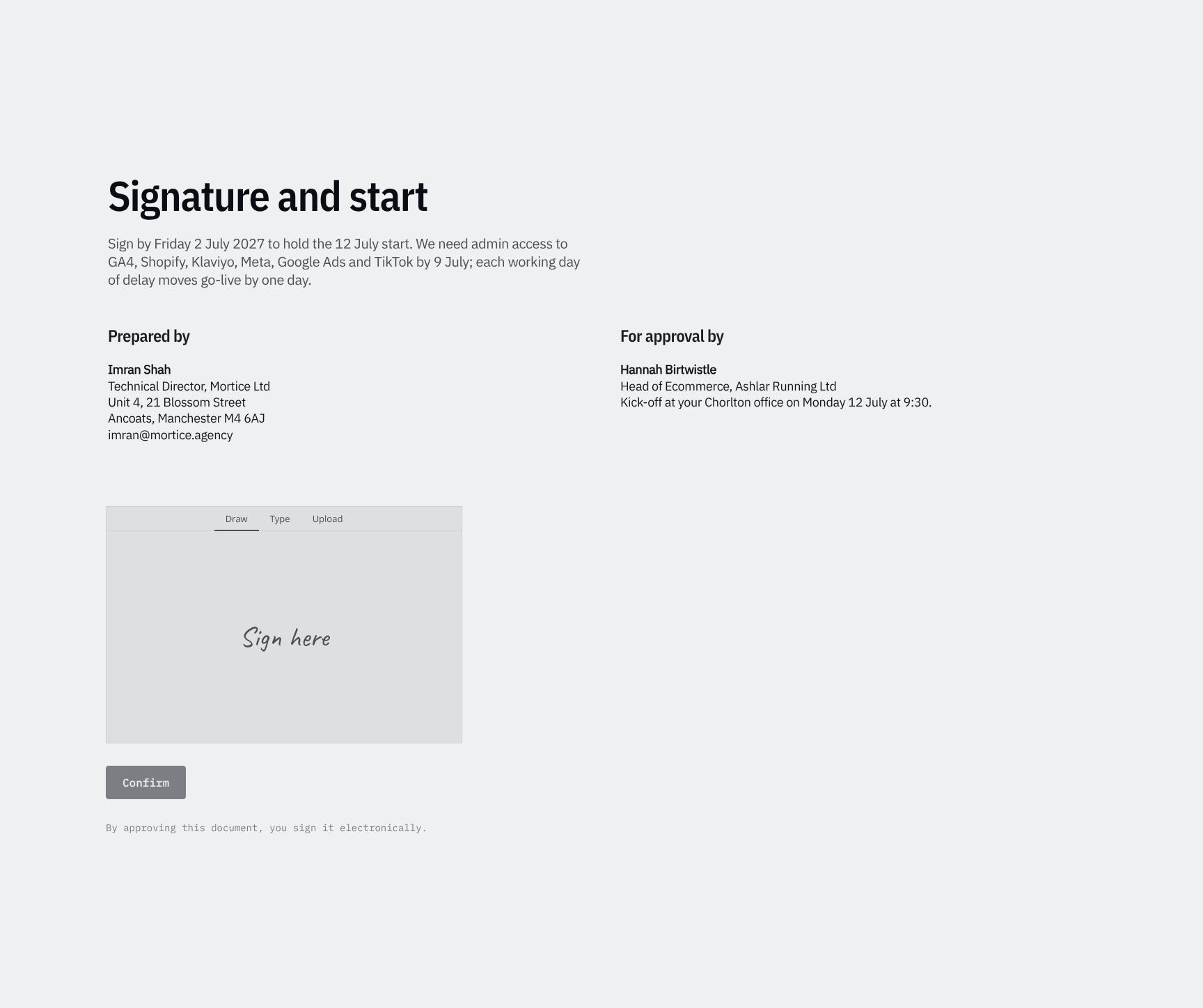
Signature Block with Start Deadline and Access Checklist
Asks for signature by Friday 2 July 2027 to hold the 12 July start, and lists the account access needed by 9 July. Explains that delays move go-live day for day, prompting prompt action.
Find your answers
Answers to common questions about scoping, pricing, and getting sign-off on paid media and lifecycle statements of work for ecommerce clients.
A solid agreement should include a cover page, a summary of the deal, guiding principles, a baseline defining the starting scope or standards, a delivery method, and acceptance and data terms. The baseline sets measurable expectations, while the acceptance section explains how deliverables are approved or rejected. Together these sections reduce disputes and keep both parties aligned.
Start with the Cover and Summary to enter party names, dates, and a short overview of the engagement. Then adjust the Baseline to reflect your scope, standards, or starting conditions, and edit the Delivery method to match how work will be handed over. Finish by tailoring the Acceptance and data section with your review timelines, approval criteria, and data-handling terms.
The baseline is the agreed reference point that defines the current state, scope, or performance standards before work begins. It matters because any later changes, improvements, or deviations are measured against it. A clear baseline prevents scope creep and gives both parties objective evidence if disagreements arise.
The acceptance section defines how and when the receiving party reviews a deliverable and confirms it meets the agreed criteria. It typically sets a review window, outlines how to report defects, and states what happens if no response is given. Customize the timelines and criteria to fit your project so approval is clear and documented.
Yes, the Acceptance and data section can be adapted for industries such as software, consulting, marketing, and professional services that exchange deliverables or information. You should specify what data is shared, how it is stored and protected, and any regulations that apply, such as GDPR or HIPAA. For regulated or high-value deals, have a qualified legal professional review the final document.
Browse more marketing templates
More templates for agencies writing proposals and agreements with ecommerce clients, built to sit alongside this statement of work.